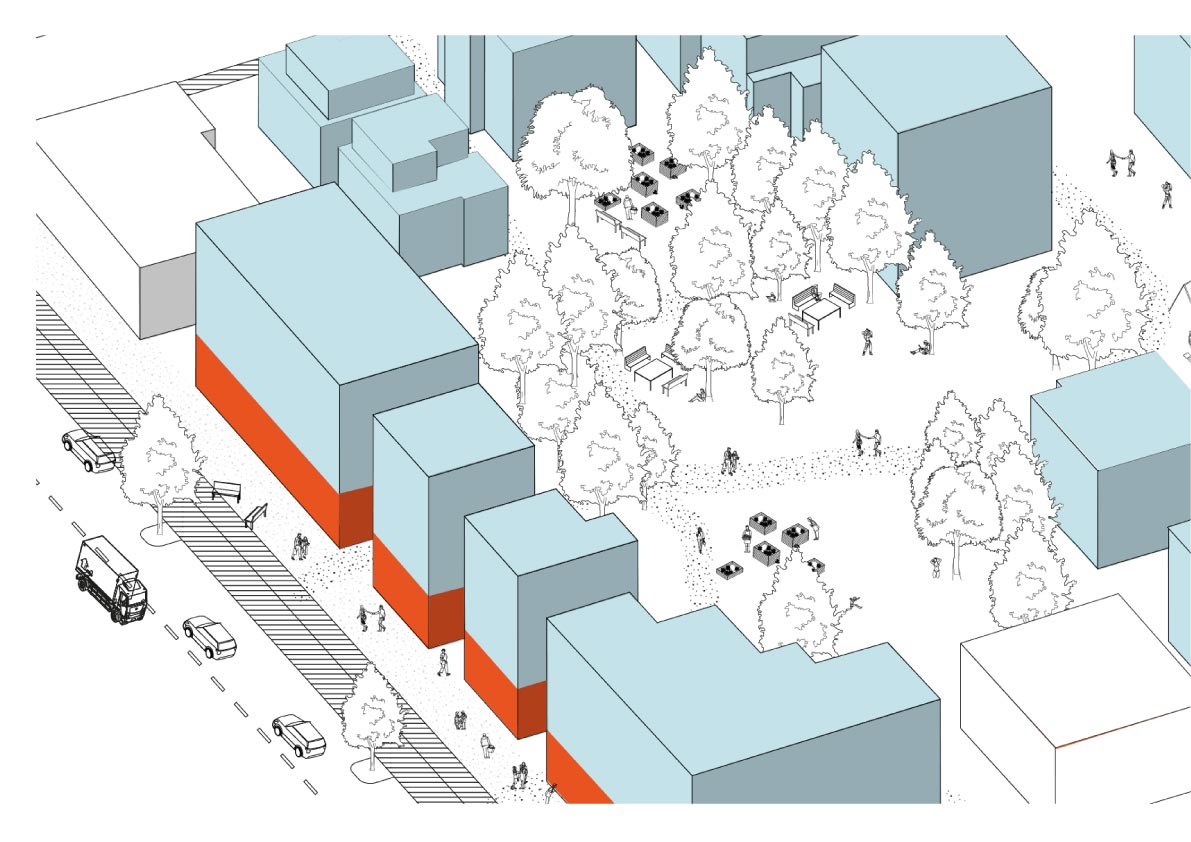
CASE STUDY 1220
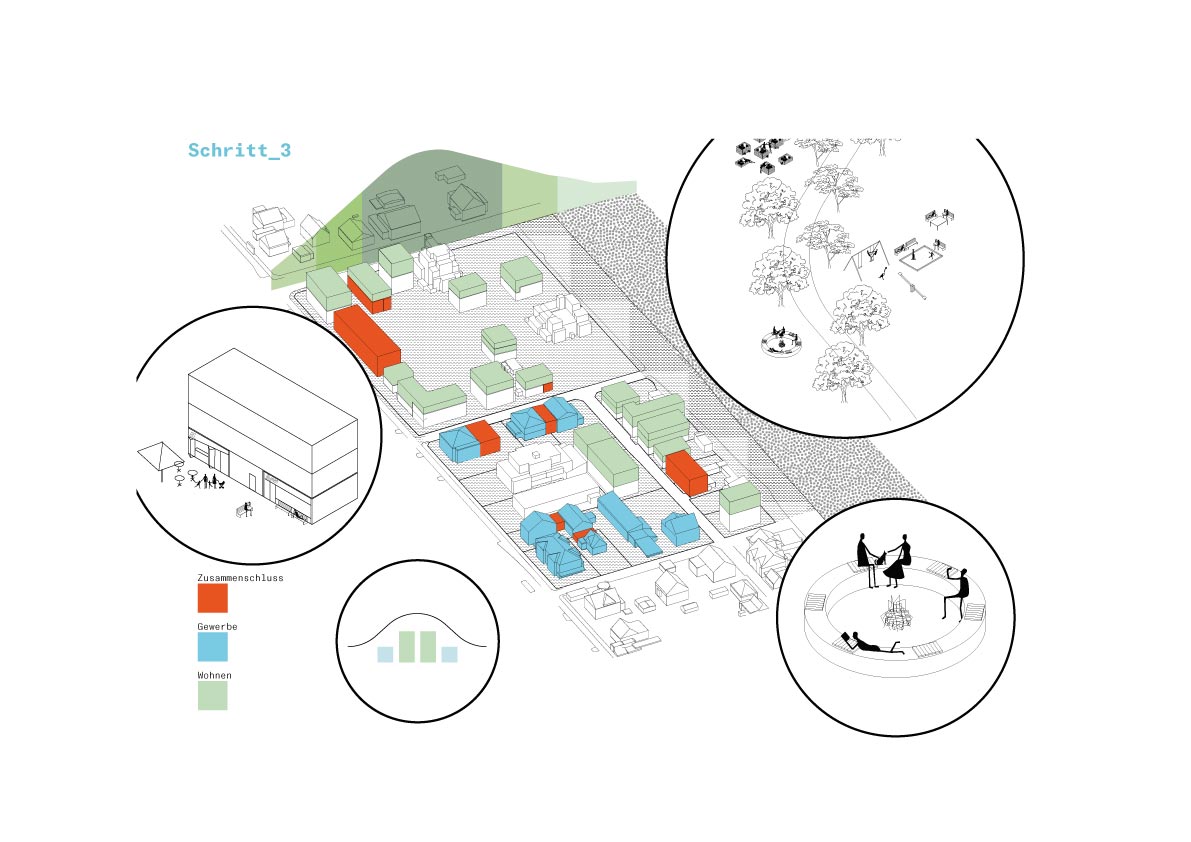
The project was developed as part of the design studio Urban Design and Landscape Architecture in the Summer Semester 2023. It involved a critical examination of the area surrounding Bieberhaufenweg in Vienna’s Donaustadt district. Central to the project was the question of how Vienna will develop in the coming years and which areas are likely to gain importance. The area around the Upper Mühlwasser is dominated by single-family housing structures from the 1950s to the 1970s. Due to the rapid growth of the city of Vienna—one of the fastest-growing cities in Europe—the single-family house has increasingly come under criticism. Investors have already begun to target this area, purchasing single-family homes in need of significant renovation.
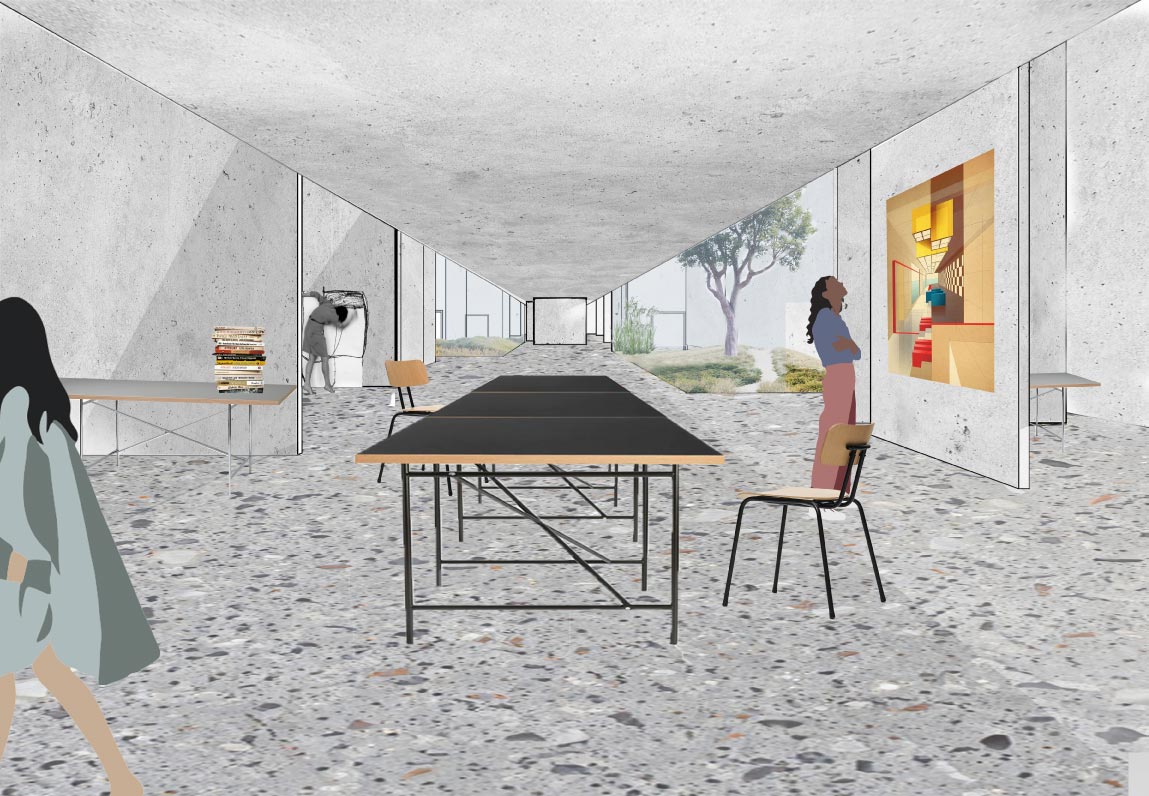
The City of Vienna has so far failed to provide a coherent response to this issue. This case study explores a scenario in which single-family houses are collectively acquired by housing cooperatives and reorganized according to a bottom-up principle. Living within these cooperatives is intended to become more social, diverse, and affordable. The Case Study 1220 aims to promote a productive city in which multiple age groups and social classes can coexist. This approach is not limited to the Mühlwasser area but can be applied to various single-family housing settlements.